
Meniscal Transplant
Reclaim Cushioning. Reclaim Movement.
National specialist knee surgeon Mr. Rohman Provides meniscal transplantation to restore native joint mechanics, eliminate post-meniscectomy pain, and protect active knees from early replacement.
Meniscal Transplant Guide
Advanced Biological Joint Salvage Reconstruction under National Specialist Knee Surgeon Mr. Lebur Rohman
1. What is a Meniscal Transplant?
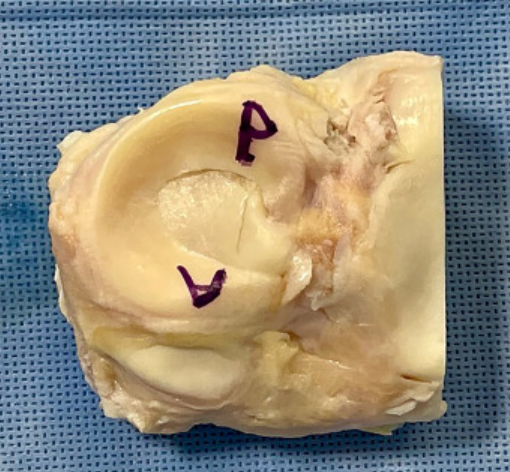
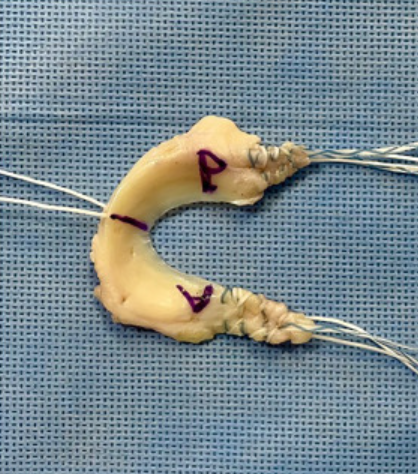
A meniscal transplant (meniscal allograft transplantation) is an advanced biological joint preservation procedure performed for patients who have previously had a meniscus surgically removed. When meniscus cartilage is missing, the knee loses its natural shock absorber, causing heavy stress on the surrounding articular cartilage and leading to deep joint pain and early osteoarthritis. A meniscal transplant replaces the missing cushion with a size-matched, sterilised donor meniscus to restore joint stability, relieve pain, and protect the knee’s long-term future.
Rebuild Joint Cushioning Before Arthritis Sets In
National specialist knee surgeon Mr. Lebur Rohman uses biological meniscal transplant reconstruction to restore native joint mechanics, eliminate post-meniscectomy pain, and protect active knees from early replacement.
2. Who is a Candidate for a Meniscal Transplant?
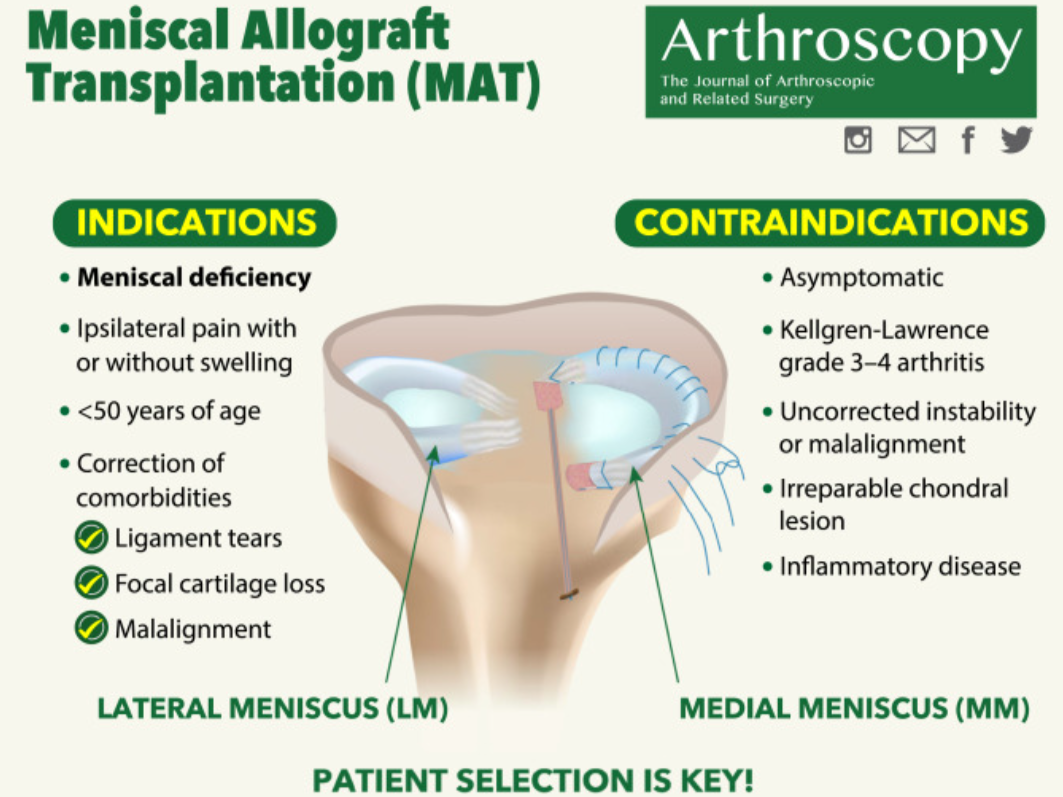
Proper patient selection is critical for meniscal transplant success. This procedure is designed for symptomatic patients who suffer from joint pain following previous meniscus removal before severe arthritis develops.
✓ Ideal Candidates
- Prior meniscus removal with persistent pain
- Active patients under 50 years old
- Minimal or early cartilage wear
- Correctable knee alignment
✕ Not Suitable For
- Advanced Grade 3–4 arthritis
- Asymptomatic knees without pain
- Uncorrected alignment deformities
- Inflammatory joint disease
Experiencing Pain After Meniscus Surgery?
Consult with national specialist knee surgeon Mr. Lebur Rohman to evaluate whether a biological meniscal transplant is right for your joint.
Book Specialist Assessment →3. Surgical Fixation Techniques: Description and Clinical Rationale
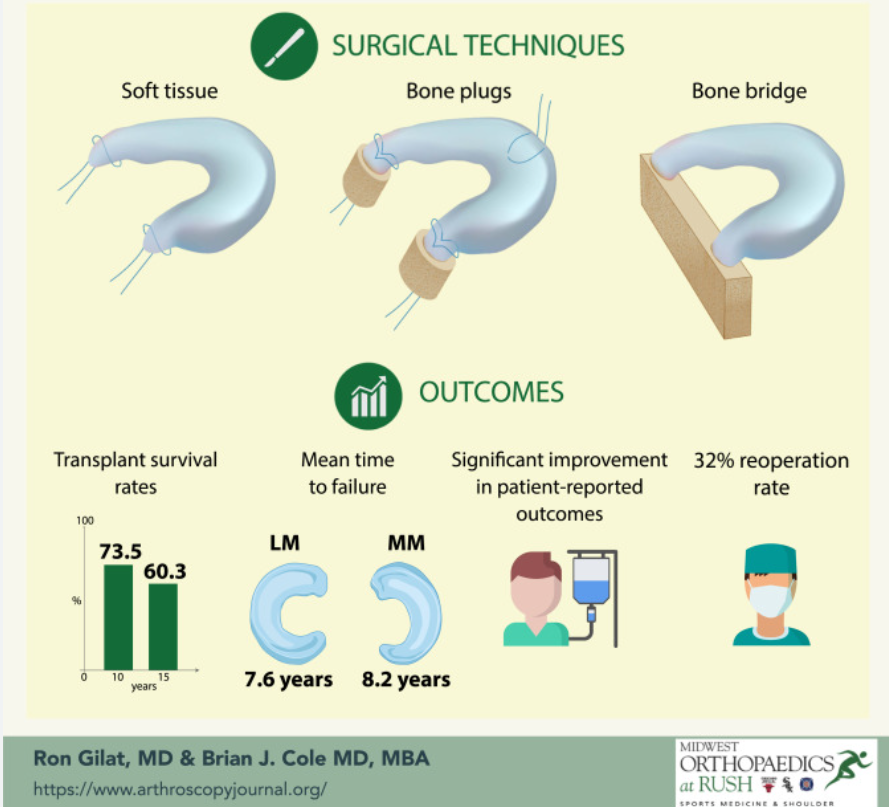
The method used to fix the meniscal allograft is critical for long-term survival. The choice between soft tissue, separate bone plugs, or a continuous bone bridge depends on whether a medial or lateral transplant is needed, the specific root anatomy, and the patient's biomechanics.
| Technique | Description & Application | Clinical Rationale & Evidence | Pros (+) | Cons (-) |
|---|---|---|---|---|
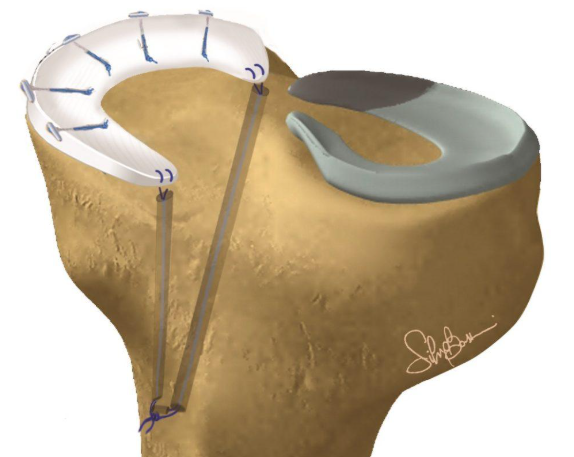
| Soft Tissue Suture Fixation | Only the meniscal tissue is transplanted. High-strength sutures are woven through the allograft horns and pulled through tunnels drilled in the tibial plateau, securing the "roots" to the bone.
Primary Application: Medial meniscal transplants. |
Biomechanical studies show that restoring circumferential tension (hoop stress) across the meniscus is essential to transmit loads. Soft tissue root fixation can effectively restore this tension. Studies confirm excellent durable pain relief for medial compartments where bony space is limited, requiring less aggressive bone removal. |
|
|
| Separate Dual Bone Plugs Method | Small bone plugs are preserved at both the anterior and posterior horn attachments of the donor allograft. Corresponding sockets are drilled into the tibial plateau, and the bone plugs are slotted in, allowing for rigid fixation.
Primary Application: Medial and Lateral transplants with specific anatomy. |
Bone-to-bone healing is generally faster and stronger than soft-tissue healing. Clinical evidence confirms that using separate bone plugs provides a significant increase in pull-out strength compared to soft-tissue anchors. This rigid anchoring is critical for resisting graft failure under early weight-bearing loads. |
|
|
| Continuous Bone Bridge (Bridge-in-Slot) | A solid bridge of bone is left connecting the anterior and posterior horns of the donor meniscus. A matched trough or slot is carved in the patient's tibia, and the bridge is slotted in to guarantee the exact distance between horns.
Primary Application: Lateral meniscal transplants. |
The anatomical distance between the roots of the lateral meniscus is tightly constrained and uniform. Preserving the native bone bridge ensures this spacing is perfectly matched. Strong laboratory evidence and meta-analyses suggest this is the strongest method for lateral compartment reconstruction and is considered the gold standard for lateral allografts. |
|
|
4. Clinical Evidence & Long-Term Success Rates
Long-term clinical data published in leading peer-reviewed journals demonstrates high graft survival and substantial pain relief following meniscal transplant surgery:
5. Recovery Timeline & Post-Operative Expectations
| Milestone | Protocol | Objective |
|---|---|---|
| Weight-Bearing | Touch-bearing on crutches for 4–6 weeks | Protect graft root anchors during bone integration |
| Brace Protocol | Locked in extension; 0°–90° flexion max for 6 weeks | Prevent deep strain on the repair site |
| Driving | 6 to 8 weeks post-surgery | Requires full control and emergency stopping ability |
| Return to Sport | Low impact at 3 mos; Pivoting sports at 9–12 mos | Ensures complete biological incorporation |
6. Frequently Asked Questions
What are the main risks and benefits of a meniscal transplant?
Benefits: Significant reduction in post-meniscectomy knee pain, restored shock absorption, enhanced joint stability, and protection against early osteoarthritic joint wear.
Risks: Infection (<1%), deep vein thrombosis (DVT), graft tearing or failure (~10–15%), joint stiffness, and a 32% long-term reoperation rate (typically for minor keyhole trimming or scar tissue removal).
How should I prepare for meniscal transplant surgery and donor tissue sizing?
What is the post-operative review and wound care schedule?
What are the weight-bearing and brace guidelines following a meniscal transplant?
When can I return to driving, work, and sports?
- Driving: Allowed 6 to 8 weeks post-op once weight-bearing is comfortable and you can safely perform an emergency stop.
- Work: Desk jobs can be resumed in 2 to 3 weeks; heavy manual roles require 3 to 6 months.
- Sports: Low-impact exercise (cycling/swimming) starts at 3 months, while running, jumping, and pivoting sports require 9 to 12 months.
Where can I access a guided rehabilitation protocol?
You can view the full protocol and progression stages directly below:
Safeguard Your Knee's Future
Schedule a private evaluation with national specialist knee surgeon Mr. Lebur Rohman to discuss biological reconstruction.
Book Private Assessment →