
Knee Osteotomy
Preserve Your Knee. Restore Your Pace.
Don't let early arthritis slow you down. Knee osteotomy realigns your joint to shift stress away from damaged cartilage—preserving your natural knee so you can keep running, playing, and staying active without a joint replacement.
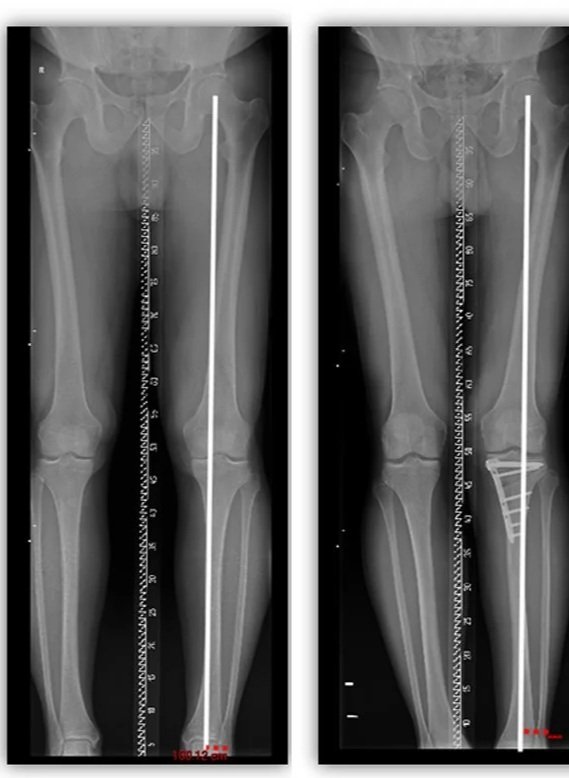
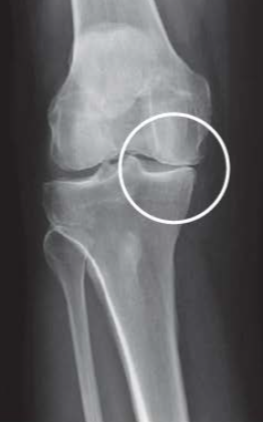
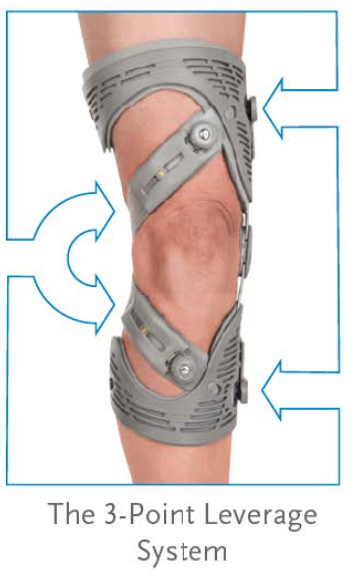
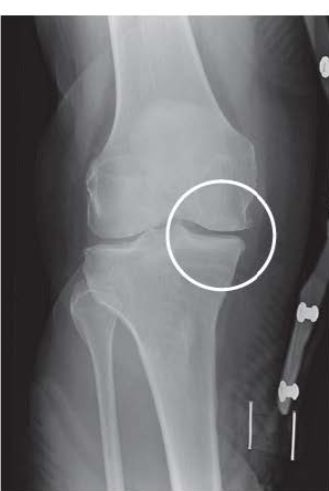
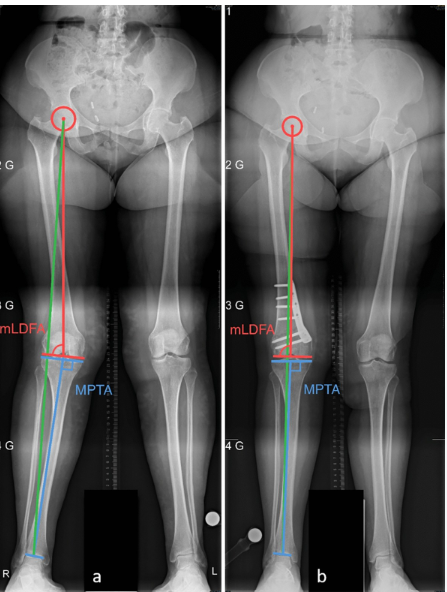
Knee Osteotomy Guide (HTO & DFO)
Advanced Biological Joint Preservation & Alignment Correction Procedures
1. Understanding Knee Osteotomy
A knee osteotomy (including High Tibial Osteotomy [HTO] and Distal Femoral Osteotomy [DFO]) is a specialized joint preservation procedure designed to realign the mechanical axis of your leg. By precisely reshaping either the upper shinbone (tibia) or lower thighbone (femur), body weight is shifted away from damaged, arthritic cartilage toward healthier, preserved areas of the joint.
The Biological Alternative
Unlike knee replacement surgery, an osteotomy preserves your native joint cartilage, cruciate ligaments, and natural joint kinematics, making it an ideal treatment for active or younger patients with single-compartment knee pain.
Surgical Objectives
The primary goal is to significantly relieve compartment-specific joint pain, restore functional mobility, and delay or prevent the need for a total knee replacement for many years.
2. HTO vs. DFO: Indications & Exclusions
The choice between a High Tibial Osteotomy and a Distal Femoral Osteotomy depends on whether arthritis affects the inner or outer compartment of the knee, as well as your structural leg alignment.
High Tibial Osteotomy (HTO)
Target: Medial Compartment (Inner Knee) Arthritis
Goal: Corrects Varus (bow-legged) alignment.
Indications:
- Isolated inner knee arthritis with localized joint pain
- Symptomatic bow-legged (varus) mechanical alignment
- Active patients under 60 years old seeking joint salvage
Exclusions:
- Widespread or severe multi-compartment osteoarthritis
- Active inflammatory joint disease (e.g., rheumatoid arthritis)
- Severe knee flexion stiffness or ligamentous instability
Distal Femoral Osteotomy (DFO)
Target: Lateral Compartment (Outer Knee) Arthritis
Goal: Corrects Valgus (knock-knee) alignment.
Indications:
- Isolated outer knee arthritis with localized pain
- Symptomatic knock-knee (valgus) mechanical alignment
- Avascular necrosis or osteonecrosis of the lateral condyle
Exclusions:
- Medial or patellofemoral osteoarthritis
- Active joint infection or uncorrected knee stiffness
Interested in Biological Joint Preservation?
Consult with a national specialist knee surgeon to evaluate whether an HTO or DFO is right for you.
Book Specialist Assessment →3. Evidence-Based Comparison: UNI Knee vs. Osteotomy
Unicompartmental Knee Arthroplasty (Partial Knee Replacement) and Knee Osteotomy are both evidence-based treatments for single-compartment arthritis, but differ fundamentally in approach:
| Clinical Category | Unicompartmental Knee (UNI Knee) | Knee Osteotomy (HTO / DFO) | Evidence & Guidance Rationale |
|---|---|---|---|
| Surgical Method | Replaces damaged compartment with prosthetic implants. | Preserves native joint; realigns the mechanical weight axis. | Osteotomy preserves natural cartilage, bone structure, and knee ligaments. |
| Ideal Patient Age | Typically >50 years old. | Typically <50 years old. | Osteotomy is strongly preferred in younger, physically active populations. |
| Impact Activities | Low to moderate impact recommended. | High impact, pivoting sports & heavy labor permitted. | Biological bone healing allows higher physical demands post-consolidation. |
| Initial Recovery | Faster initial recovery; immediate weight-bearing. | Slower initial recovery; controlled weight-bearing (4–8 weeks). | Bone wedge consolidation requires a protected weight-bearing timeline. |
| 10-Year Survival | 90% – 97% | 80% – 90% (HTO) / 75% – 85% (DFO) | Osteotomy successfully delays total knee replacement while saving the native joint. |
4. Clinical Outcomes, Survival & Revision Rates
Long-term clinical registry data and peer-reviewed trials highlight the high functional capabilities achieved through joint-preserving osteotomies:
HTO Survival
10-Year Joint Survival Rate
DFO Survival
10-Year Joint Survival Rate
Sports Return
Return to High-Impact Activity
Future Revision
If conversion to a total knee replacement is needed later in life, it proceeds straightforwardly as a standard primary knee surgery.
5. Post-Operative Expectations & Frequently Asked Questions
What is achieved by a knee osteotomy operation?
What are the risks and benefits of a High Tibial Osteotomy (HTO) or Distal Femoral Osteotomy (DFO)?
Benefits: Biological preservation of your natural knee cartilage and cruciate ligaments, substantial relief from single-compartment pain, and the unique ability to return to high-impact sports, running, or heavy manual labor.
Risks: Wound infection (<1%), delayed bone healing or non-union, deep vein thrombosis (DVT), hardware irritation (fixation plate/screws), or joint stiffness.
How do I manage post-operative pain with medications and cryotherapy?
Multi-Modal Pain & Swelling Protocol:
- Medications: Regular paracetamol and prescribed anti-inflammatories (NSAIDs), supplemented by short-term stronger prescribed analgesics during early recovery.
- Cryotherapy (Cold Therapy): Applying ice or cold compression wraps for 20 minutes per session, 4 to 6 times daily, is critical during the first 2 to 4 weeks to control inflammation, joint swelling, and surgical pain.
What is the weight-bearing status during recovery from a knee osteotomy?
When can I return to work, driving, sports, and heavy manual labor?
- Desk Work (Sedentary): 3 to 6 weeks post-surgery.
- Driving: 6 to 8 weeks (once off crutches, weight-bearing comfortably, and capable of performing a safe emergency stop).
- Manual Labor: 3 to 6 months depending on daily standing and lifting demands.
- Impact Sports & Pivoting Activities: 6 to 12 months following confirmed solid bone consolidation.
What is the schedule for follow-up appointments and standing X-rays?
Where can I access the official post-operative knee osteotomy rehabilitation guide?
You can access official physiotherapy and rehabilitation guidelines via the link below:
Safeguard Your Knee's Future
Schedule a private evaluation with national specialist knee surgeon Mr. Lebur Rohman to discuss knee osteotomy options.
Book Private Assessment →