
Total Knee Replacement
Reclaim Your Freedom, Together
Chronic knee pain shouldn’t keep you from the people you love. Advanced Total Knee Replacement by Mr. Lebur Rohman restores your mobility and eliminates arthritic pain—helping you step back into a vibrant, active life together.
Total Knee Replacement (TKR): Comprehensive Patient & Clinical Guide
Advanced Joint Reconstruction, Evidence-Based Outcomes, Consent & Risks, and Complete Recovery Guidelines under Mr. Lebur Rohman
1. Pathology & Indications for Total Knee Replacement
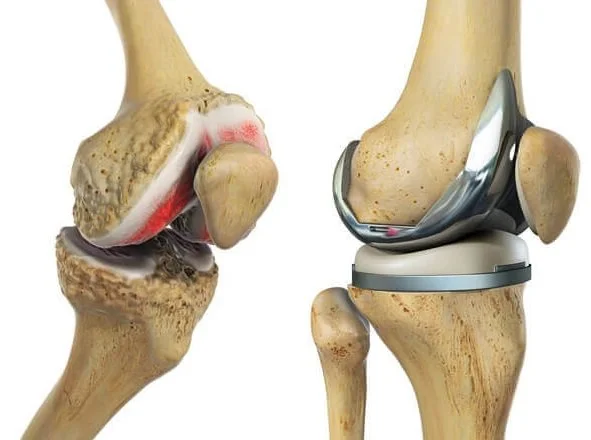
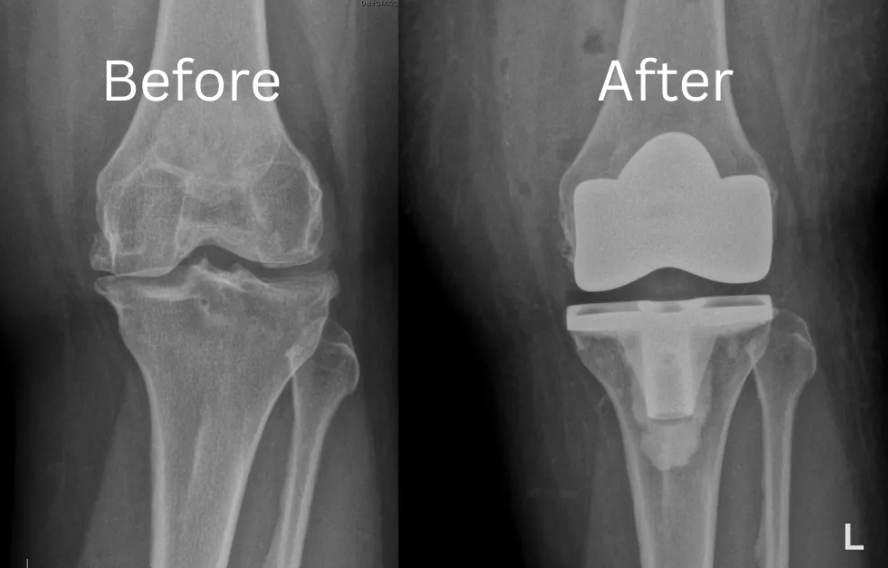
The knee joint comprises the distal femur (thigh bone), proximal tibia (shin bone), and patella (kneecap). Healthy joint surfaces are cushioned by smooth articular cartilage, enabling near-frictionless gliding. Osteoarthritis (OA), post-traumatic joint breakdown, or inflammatory arthritis causes progressive degeneration of this articular layer. As cartilage wears down, exposed bone rubs directly on bone, leading to subchondral sclerosis, osteophyte (bone spur) formation, localized inflammation, severe pain, joint stiffness, and mechanical limb malalignment (varus bow-leggedness or valgus knock-knees).
Conservative Management Threshold
Surgical total knee replacement is indicated when non-operative treatments fail to maintain an acceptable quality of life. Non-surgical modalities include:
- Prescription oral analgesics and anti-inflammatory medications (NSAIDs).
- Intra-articular steroid or hyaluronic acid injections.
- Targeted physical therapy emphasizing quadriceps and hamstring strengthening.
- Weight optimization, activity modification, and supportive offloading braces.
Surgical Indications & Patient Selection
A Total Knee Replacement may be recommended if you present with:
- Multi-Compartmental Wear: Severe end-stage cartilage degradation affecting two or more knee compartments.
- Refractory Night Pain: Persistent, severe joint pain that disrupts sleep and resists oral pain medication.
- Functional Impairment: Marked restriction in walking distance, stair climbing, rising from a chair, or maintaining independence.
- Fixed Angular Deformity: Uncorrectable varus/valgus alignment or fixed flexion contractures.
2. Surgical Procedure: What Happens During Total Knee Replacement?
A Total Knee Replacement is a precise joint resurfacing procedure. Rather than removing the entire joint, only the worn-out cartilage and a few millimeters of underlying diseased bone are removed and replaced with biocompatible implants.
1. Precision Resection
Orthopedic guides remove diseased cartilage and minimal bone from the ends of the femur and tibia to restore the natural joint plane.
2. Component Fixation
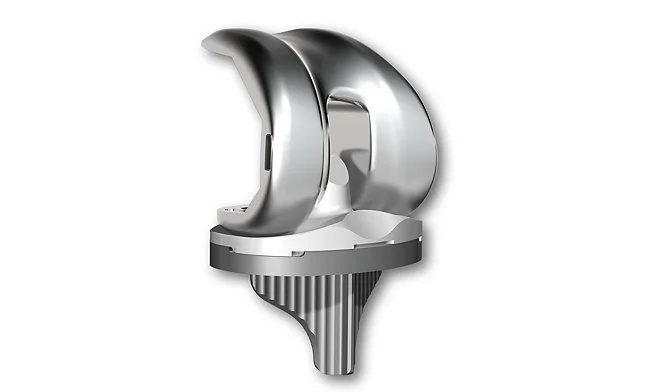
Specialized metallic femoral and tibial components are securely fixed to native bone, typically using orthopedic PMMA bone cement.
3. Bearing Insertion
A ultra-high-molecular-weight polyethylene plastic spacer is locked between the components, re-creating a low-friction gliding joint.
Why Choose Mr Lebur Rohman for Your Knee Replacement?
- Specialist Knee Focus: Dedicated subspecialist practice focused on complex knee reconstruction, preservation, and replacement.
- Proven NJR Implants: Exclusively uses top-rated National Joint Registry (NJR) implants with benchmarked ODEP 10A* durability ratings for long-term confidence.
- Rapid Recovery & Day-Case Protocols: Advanced regional nerve blocks and muscle-sparing surgical techniques designed for minimal pain, early walking, and accelerated discharge.
- Patient-Centred Care: Personalized surgical planning that balances your lifestyle goals with precise anatomical alignment for a natural-feeling joint.
Is Total Knee Replacement Right for You?
Schedule a private consultation with knee specialist Mr. Lebur Rohman to discuss joint reconstruction options and regain your independence.
Book Your Consultation Today3. Evidence Base & Clinical Outcomes
Total Knee Replacement is widely recognized as one of the most successful interventions in modern reconstructive surgery, supported by robust global registry data and prospective clinical trials:
Long-Term Implant Longevity
Large-scale national joint registry data (including the UK National Joint Registry and Australian Orthopaedic Association NJRR) confirm exceptional implant survival:
- 15-Year Survival: Over 93% to 95% of modern primary total knee replacements remain securely fixed and functional without requiring revision surgery.
- 20-Year Survival: Long-term follow-up demonstrates that roughly 82% to 88% of implants last 20 years or longer.
- Implant Fixation: Advanced PMMA cementing techniques and modern component geometry have significantly reduced aseptic loosening rates.
Functional Improvement & Quality of Life
Clinical trials assessing Patient-Reported Outcome Measures (PROMs) demonstrate profound post-operative benefits:
- Pain Relief: Over 85% to 90% of patients report substantial or complete relief from chronic arthritic joint pain.
- Oxford Knee Score (OKS): Patients consistently show dramatic increases in post-operative functional scores evaluated at 6 months and 1 year.
- Health-Related Quality of Life: Significant improvements are measured in mobility, emotional well-being, and ability to perform daily tasks independently.
4. Surgical Consent: Benefits & Potential Risks
Before proceeding with Total Knee Replacement surgery, patients undergo a thorough informed consent process to weigh the substantial benefits against potential surgical risks.
Expected Benefits of TKR
- Significant Pain Reduction: Alleviation of severe, continuous arthritic pain and night pain.
- Restored Mobility: Increased walking distance, improved ability to negotiate stairs, and easier standing.
- Correction of Deformity: Realignment of bow-legged (varus) or knock-kneed (valgus) deformities back to a neutral mechanical axis.
- Improved Quality of Life: Return to active daily living, gardening, travel, and low-impact sports (golf, swimming, cycling).
Recognized Surgical Risks & Complications
- Infection (~0.5% - 1%): Deep prosthetic infection requiring antibiotics or further surgery. Antibiotics are given routinely to minimize risk.
- Deep Vein Thrombosis (DVT / Blood Clots): Clots in leg veins that can travel to the lungs (PE). Managed with blood thinners and compression stockings.
- Joint Stiffness: Scar tissue buildup causing reduced flexion or extension; may occasionally require manipulation under anesthesia (MUA).
- Nerve or Vessel Injury: Rare injury to surrounding nerves or blood vessels causing numbness or muscular weakness.
- Aseptic Loosening / Mechanical Wear: Gradual wear of the plastic insert or loosening of metal components from bone over many years.
- Residual Discomfort: Up to 10-15% of patients may experience mild lingering tightness, clicking sensations, or minor kneeling pain.
5. Frequently Asked Questions Regarding Total Knee Replacement
How should I prepare for total knee replacement surgery, and what happens on the day of surgery and on the ward?
- Pre-Operative Preparation: Attend your pre-assessment clinic for blood tests, MRSA swabs, and ECG. Stay active with gentle quad exercises ("pre-habilitation"), stop smoking, and follow exact fasting instructions given for the night before surgery.
- On the Day of Surgery: You will arrive at the hospital admissions unit, be met by your nursing team, consultant anesthetist, and Mr. Rohman to mark your leg and confirm consent. Surgery typically takes 1 to 2 hours under spinal anesthesia with light sedation.
- On the Ward: You will be transferred to the orthopedic ward with a bulky knee dressing. Your physiotherapist will get you out of bed to stand and walk with a frame or crutches within hours of returning to the ward to encourage blood flow and early joint extension.
What are the hospital discharge criteria, home adjustments, and family support needed after total knee replacement?
- Discharge Criteria: Pain controlled with oral tablets, ability to safely walk with crutches/sticks, negotiate steps/stairs independently, bladder function fully recovered, normal blood tests and X-rays.
- Home Adjustments: Remove loose rugs, clear walkways of trip hazards, place frequently used items at waist height, and ensure a sturdy chair with armrests is available. A toilet seat raiser may be provided by occupational therapy.
- Family & Carer Support: Arrange for a family member or friend to stay or assist you for the first 1 to 2 weeks home to help with meal preparation, shopping, ice pack changes, and medication schedules.
When and how can I use an exercise bike (stationary bike) at home or in the gym after total knee replacement?
- When to Start: Usually around 2 to 4 weeks post-op, once your wound is dry/healed and you have achieved at least 90 degrees of knee bend. Always get clearance from your physiotherapist first.
- Bike Setup: Raise the seat slightly higher than normal so your knee does not bend too sharply at the bottom of the pedal stroke. Start with zero pedal resistance.
- Technique: Begin by gently rocking the pedals backward and forward. Once you can make a full backward revolution smoothly, attempt your first full forward revolution. Start with 5-minute sessions once or twice daily and gradually build up duration before adding light resistance.
How should I manage pain and structure analgesia cycling after total knee replacement surgery?
- Base Layer: Take regular simple analgesics (such as Paracetamol) and prescribed anti-inflammatories at set time intervals as directed.
- Breakthrough Relief: Use prescribed stronger medications (e.g., codeine or tramadol) as required for breakthrough pain, especially 30 to 45 minutes prior to performing your physical therapy exercises.
- Tip: Keep a written log of the time and dose of each medication you take to prevent accidental double-dosing or missed intervals.
How often should I use ice packing (cryotherapy) after total knee replacement surgery?
- Apply a gel ice pack or a bag of frozen peas wrapped in a damp tea towel over your knee for 15 to 20 minutes per session.
- Repeat this 3 to 5 times daily, particularly immediately following your rehabilitation exercise routine.
- Safety Warning: Never apply ice directly to bare skin, as this can cause cold burns or skin breakdown near surgical incisions.
What initial exercises should I do to recover range of movement (ROM) after total knee replacement?
- Ankle Pumps: Repeatedly point and flex your feet up and down to promote venous circulation and help prevent DVT blood clots.
- Static Quadriceps (Knee Presses): Lie flat on your back, push the back of your knee down firmly into the bed, tighten your thigh muscle, and hold for 5 seconds.
- Heel Slides: Lie down and gently slide your heel up toward your buttocks, bending the knee as far as comfortable, holding for 5 seconds, then sliding back straight.
- Straight Leg Raises: Tighten your thigh and lift your leg 6 inches off the bed, hold for 3–5 seconds, and slowly lower.
Where can I access guided video tutorials for total knee replacement rehabilitation exercises?
You can access video guides for every stage of your total knee replacement recovery through our recommended NHS physiotherapy links:
What is the recovery timeline for driving and returning to work after total knee replacement surgery?
- Hospital Stay: Most total knee replacement patients return home within 1 to 2 days after surgery (or same-day for selected day-case pathways).
- Walking Aids: Crutches or frames are used for the first 2 to 4 weeks until quadriceps strength recovers and walking without a limp is possible.
- Driving After Knee Replacement: You may resume driving once you are off strong opioid medications, can perform a safe emergency stop, and have been formally cleared by your consultant (typically 6 weeks post-op).
- Return to Work: Sedentary or desk work can usually be resumed at 6 weeks; heavy manual labor may require 3 months.
Take the First Step Toward Pain-Free Mobility
Get an expert assessment from Consultant Orthopaedic Surgeon Mr. Lebur Rohman to evaluate your knee joint and restore your quality of life.
Schedule Your Consultation